






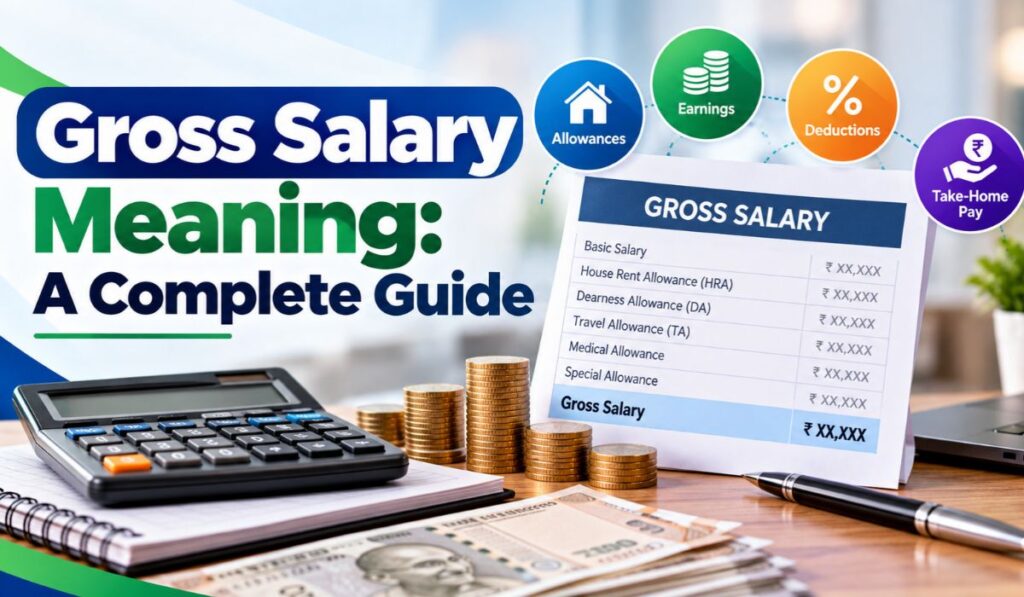
Understanding gross salary meaning can be one of the best ways to begin managing your money. Knowing the gross salary meaning can help you decide how much you should negotiate for if you are a beginner looking for work, an experienced worker negotiating a new position, or even just someone who wants to understand their paycheck. Here we will explain what gross salary means, the differences between gross and net salary, what goes into determining a gross salary, and why gross salary is such an essential part of the work place.
What is Gross Salary?
Gross salary meaning is defined as the total sum of money an employee receives from their employer prior to making deductions for tax, provident fund, insurance premium, and other mandatory contributions. Gross salary includes the employee’s base salary as well as any other benefits, such as allowances, bonuses, etc., that the employer provides. If you understand what gross salary means, then you will also know that the calculation of your gross salary takes place prior to subtracting the taxes, provident funds, insurance premiums, and other statutory deductions.
In simple words, the gross salary is the total amount of money that you will receive each year or each month (depending on what was specified in your employment agreement) as part of your total compensation package, prior to any deductions being made. Knowing the definition of gross salary is very important since most job offers are stated in terms of gross salary; therefore, candidates frequently misinterpret this number as their net take-home pay.
Components That Make Up Gross Salary
The best way to understand the full definition of a gross salary is to understand the different parts that make up a gross salary. A typical gross salary consists of these components:
- Basic Salary: This is the stable portion of your pay and typically comprises 40% to 50% of your total gross salary.
- House Rent Allowance (HRA) – A type of allowance given to assist employees with paying for their living accommodations.
- The Dearness Allowance (DA) is generally used by the government as an adjustment to account for inflation in the wages of its employees.
- Conveyance Allowance – Covers the cost of commuting to and from work.
- Medical Allowance – Provided to cover medical expenses incurred by the employee.
- Special Allowances – All other types of allowances, such as those that are not defined in any of the above listed categories.
- Bonuses and Incentives: The bonus and incentive structures (performance-based or holiday/festival) are part of the overall compensation system.
- Overtime Pay – Compensation for working more than your normal amount of time.
All of the components listed above make up the total gross salary definition. Together, all of the components provide the total amount an employer is paying an employee prior to deduction.
Gross Salary vs Net Salary
A major area of misunderstanding when discussing the definition of gross salary is the difference between gross salary and net salary. Gross salary refers to the amount that is paid to an employee prior to any deductions being made. Net salary, on the other hand, is the amount of money an employee receives after all of their deductions are taken out of their paychecks.
Deductions that reduce gross salary to net salary typically include:
- Income tax (TDS)
- Provident Fund (PF) contribution
- Professional tax
- Employee State Insurance (ESI), if applicable
- Loan repayments or other voluntary deductions
Employees can better budget their money when they understand what their gross salary is as well as how it differs from their net salary because employees will always receive less money into their bank accounts than what was stated on the original gross salary in their employment offer letter.
Gross Salary vs CTC (Cost to Company)
Another name that people frequently mix up with the definition of gross salary is CTC, or Cost to Company. CTC represents the complete amount of money spent by the company on each employee during the course of one year. CTC is made up of the employee’s gross salary as well as other employer-paid expenses including:
- Employer’s PF contribution
- Gratuity
- Insurance premiums paid by the employer
- Other employee benefits (meal cards, stock options, etc.)
As such, although Gross Salary is one component of the CTC, it will not reflect the employer-only contributions. Understanding how the Gross Salary relates to the CTC will allow job seekers to assess offers more accurately, as a high CTC does not automatically imply a proportionately high Take-Home Salary.
How to Calculate Gross Salary
Gross Salary Calculation Process is fairly simple after you have learned about the definition of Gross Salary and its various parts. This is the simple formula for calculating Gross Salary:
Gross Salary = Basic Salary + HRA + DA + Conveyance Allowance + Medical Allowance + Special Allowance + Bonus(es) + Other Allowances
For example, if an employee has:
- Basic Salary: ₹30,000
- HRA: ₹12,000
- Conveyance Allowance: ₹2,000
- Medical Allowance: ₹1,500
- Special Allowance: ₹4,500
Then the gross salary would be ₹30,000 + ₹12,000 + ₹2,000 + ₹1,500 + ₹4,500 = ₹50,000 per month.
The gross salary is clarified here by an example that shows how each component makes up the total gross salary.
Table: Gross Salary Components Breakdown
| Component | Description | Approximate % of Gross Salary |
| Basic Salary | Fixed base pay | 40-50% |
| HRA | Housing support allowance | 20-30% of Basic |
| DA | Inflation-adjustment allowance | Varies (mostly govt jobs) |
| Conveyance Allowance | Commuting expense coverage | 5-10% |
| Medical Allowance | Medical expense coverage | 5% |
| Special Allowance | Residual/flexible component | Varies |
| Bonus/Incentives | Performance-based pay | Varies |
| Overtime Pay | Extra hours compensation | Varies |
The table clearly shows how gross salary is broken down into various parts. This helps to reinforce what gross salary means by showing it visually in a way that is easy to comprehend.
Why Understanding Gross Salary Meaning Matters
Knowing the gross salary meaning is crucial for several reasons:
1. Better Salary Negotiation
When you negotiate a job offer, knowing the definition of “gross salary” will help you to ask the correct questions regarding what is part of that total number, instead of making the assumption that this amount represents your actual take-home income.
2. Accurate Financial Planning
Because of the difference between gross salary (which is greater) and net salary, understanding what gross salary means allows you to make realistic budgets, considering tax implications and other deductions instead of overestimating how much money you will have available after taxes.
3. Tax Planning
Gross salary is the basis upon which an employee’s income tax liability will be determined. Knowing what gross salary means allows an employee to invest strategically to reduce their tax liabilities through different parts of the Income Tax Act.
4. Loan and Credit Applications
When banks and other financial institutions assess whether a person is eligible to receive a loan, they typically request information about that individual’s gross salary. Understanding what constitutes your “gross salary” will help ensure you submit accurate data in the application process.
5. Comparing Job Offers
In order to compare several job offers, it is helpful to know what the definition of gross salary is for each company. Knowing this will allow you to make a direct comparison (apples to apples) because companies can use different methods to determine how they pay out allowances.
Common Misconceptions About Gross Salary
Many employees do not understand what is meant by “gross salary,” which results in misunderstanding when they discuss their pay. There are several misinterpretations of the term “gross salary.”
- Misconception 1: Gross salary is the same as your take-home pay. This statement is incorrect; gross salary refers to the amount you are paid prior to any deductions, whereas take-home pay refers to the amount of money you actually receive after all applicable deductions have been made.
- Gross Salary and Cost To Company (CTC) are two different things. CTC includes some of the company’s cost to hire you which is not included in your gross salary.
- Misconception 3: You can save more money if you have a larger gross salary. If you have a larger gross salary, this does not necessarily mean that you will be able to save a greater percentage of your gross salary because of different tax rates and deductions.
Understanding the true definition of gross salary requires dispelling these false beliefs.
How Employers Use Gross Salary
Employers use gross salary for multiple administrative purposes, including:
- Calculating statutory deductions like PF and ESI
- Determining tax liability for employees
- Structuring compensation packages competitively
- Complying with labor laws and minimum wage regulations
The use of the term “gross salary” by administration further demonstrates why it has been a fundamental concept within payroll and HR management.
Gross Salary in Different Industries
Across industries, the definition of gross salary remains unchanged; however, the composition of the gross salary and its relative proportions may differ. An example would be:
- IT Industry: A lot of times your total compensation includes many special benefits and/or performance-based incentives.
- The Manufacturing Sector: Overtime pay makes up a greater portion of the calculation for total earnings (gross salary).
- Government Employment: The dearness allowance (DA), which is a major part of the total income, is reviewed regularly to account for changes in the cost of living due to inflation.
- Start-ups: Gross salaries may include variable compensation such as stock options or equity, although sometimes they are reported as separate items.
Understanding the different ways that the “gross salary” definition applies to different types of businesses will allow people looking for work to establish realistic expectations when comparing job opportunities in different industries.
Tips to Maximize Your Gross Salary Benefits
Once you have a better understanding of what your gross salary means, then you will be able to make smart decisions regarding your total compensation.
- The Wise Use of Allowances -You may have a portion of your allowance(s) that is exempt from taxes. Therefore, by using the proper combination of allowances when determining your salary, you can lower the amount of taxes you owe.
- Learn about Tax Saving Components – HRA (House Rent Allowance), LTA (Leave Travel Allowance) and many more allowances in the Gross Salary can be used to get tax benefits by providing the required documentation.
- Check Your Paycheck Every Month – Verify that all of the parts of your gross pay match what was agreed upon in your job offer so that you know if there are any discrepancies.
Plan ahead for your deductions – Knowing what your gross salary will be will allow you to know exactly how much you can expect to pay out each month for PF, taxes, etc. This makes it easier to estimate what your net salary will look like.
Final Thoughts
The gross salary definition is an essential idea that each employee should comprehend. This refers to the full amount of money received by an individual prior to having taxes deducted from it. It forms the basis of calculating net salary, tax liabilities, and any other monetary responsibilities. When you understand the gross salary definition, you can have greater control of your financial plans, make informed decisions when negotiating your salary, and take the best path forward in your career.
A solid understanding of what “gross salary” means will allow you to make better financial decisions. For example, when you are reviewing a job offer, when you are doing your taxes, or when you are just trying to get a clearer picture of your pay stub. It is important to remember that gross salary is not the amount of money you actually receive in your bank account this is the first thing you need to know if you want to be a smart money manager.
FAQs: Gross Salary Meaning
1. What is the simple gross salary meaning?
In simple terms, the gross salary is the amount of money you make from your job prior to having taxes, pension contributions (Provident Fund) and insurance deducted.
2. Is gross salary the same as take-home salary?
No, understanding the definition of a gross salary will make it evident that a gross salary includes all earnings prior to tax and other applicable deductions; whereas, the amount of money you receive in your pocket as take-home pay is called your net salary.
3. Does gross salary include bonuses?
Yes, most organizations include bonuses and/or incentives within an employee’s total compensation package (gross salary).
4. How is gross salary different from CTC?
CTC consists of an employee’s total compensation including their gross salary as well as other benefits that the company pays into (e.g., PF, gratuity, and insurance). On the other hand, the gross salary is simply what the employee earns directly from his/her employer prior to any deductions being made.
5. Why is understanding gross salary important for tax planning?
Employees can use their understanding of what constitutes a “gross salary” in order to make informed decisions about how they will invest and deduct money from their paychecks in order to reduce the amount of income taxes that are owed. This is due to the fact that income tax is determined based upon the total earnings of an individual prior to any applicable deductions being made.
6. Does gross salary vary month to month?
Gross wages can vary from month to month as they can include variable elements such as overtime pay, performance-based bonuses, and other types of incentives that can fluctuate based on how well an employee performs and/or the number of hours an employee works during a specific timeframe.

Dalvi Goyal is a dedicated content writer at TheSalaryInfo.com, specializing in salary insights, career trends, job market updates, and workplace topics. With a strong focus on research and accuracy, Dalvi creates easy-to-understand content that helps students, job seekers, and working professionals make smarter career and financial decisions.