





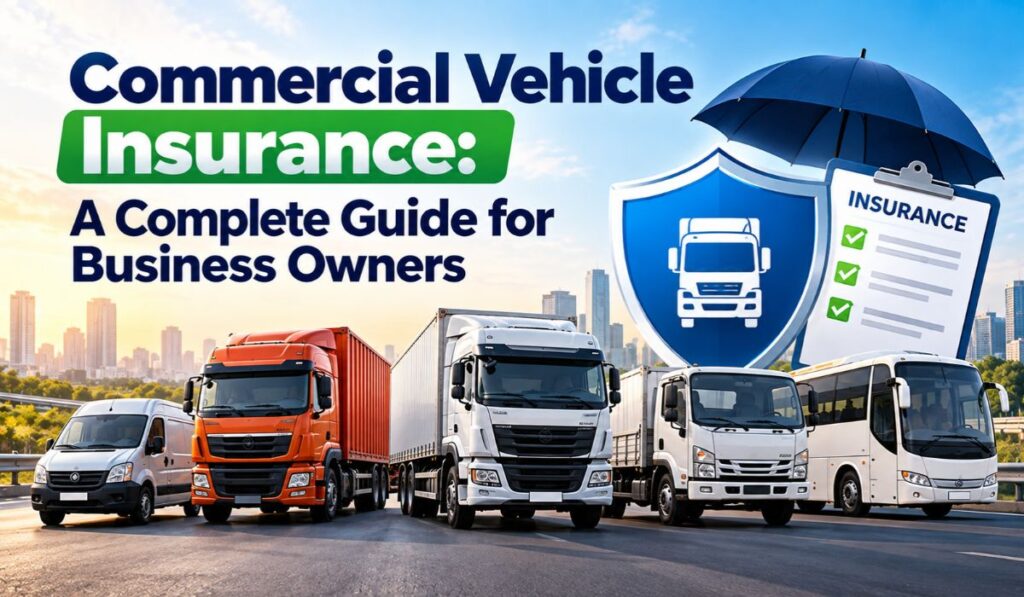
If your business relies on any type of vehicle – such as one delivery van or an entire fleet of trucks – there are certain risks associated with operating these vehicles that cannot be covered by your individual auto policy. Commercial vehicle insurance provides coverage for the use of vehicles in connection with the operations of a business; it protects the vehicle from loss due to theft or accident, as well as providing liability protection against third-party claims. Commercial vehicle insurance also includes optional coverage for cargo damage.
We will provide you with all of the information you need regarding commercial vehicle insurance including: what types exist, what benefits they offer, what is typically included within each policy and some of the most common questions people ask about commercial vehicle insurance.
What is Commercial Vehicle Insurance?
Commercial vehicle insurance is a specialized form of insurance that has been developed to cover vehicles being utilized within a commercial or business environment. Examples of these types of vehicles would include delivery vans, construction vehicles, buses, taxis, and goods carriers. As opposed to personal vehicle insurance, commercial vehicle insurance takes into consideration the higher risks associated with increased road usage, heavier payloads, and professional driver utilization.
In many parts of the world (including but not limited to India, the United States, and the United Kingdom), any vehicle used to transport either people or goods/equipment on a regular basis for commercial reasons is required by law to have commercial vehicle insurance. For more information about business coverage options, you can explore corporate insurance policy resources.
No matter if you operate a single-truck logistics operation or oversee an entire fleet of commercial vehicles, commercial vehicle insurance provides financial protection for your business in the event of an unexpected disaster (such as a hurricane, tornado, fire, etc.), an accident, theft, or liability for damage caused to third parties.
Why is Commercial Vehicle Insurance Important?
The increased exposure to risk of business vehicles because of the frequency with which they travel is a direct result of being on the road much more frequently than personal vehicles. Commercial vehicle insurance should be considered an absolute necessity for businesses due to the following reasons:
- Legal Compliance: Most countries require commercial vehicle insurance by law. If you operate a commercial vehicle with no valid insurance, you may face severe consequences such as large fines, having your vehicle seized and/or losing your ability to run your business.
- Commercial vehicle insurance provides protection for your business against unexpected expenses due to accidents, breakdowns and/or theft.
- Liability Coverage for Third Parties: Commercial vehicle insurance provides financial protection if you cause an injury or property damage to a third party. This type of coverage will help pay for your legal fees and any compensation owed to the other party, helping to protect your business from being sued.
- Commercial vehicle insurance protects the business owner’s investment in their commercial vehicles. If a commercial vehicle suffers damage or is lost, then commercial vehicle insurance will help cover some of the costs so that the business owner does not experience financial hardship.
- Peace of Mind: Having commercial auto insurance allows businesses to concentrate on expanding their operations instead of stressing over what might happen if one of their vehicles gets into an accident.
Types of Commercial Vehicle Insurance
Knowing the various types of commercial vehicle insurance allows you to select the correct insurance for your individual business requirements.
Goods Carrying Vehicle Insurance
Commercial vehicle insurance is used to cover trucks, trailers, and vans which are used to move product. Commercial vehicle insurance provides coverage for damage to the vehicle itself, as well as liability for the product that is being moved.
Passenger Carrying Vehicle Insurance
This type of vehicle insurance includes commercial vehicles such as buses, taxis, and auto rickshaws. The insurance provides both third party liability protection to drivers (as well as to other road users) for damage caused by accidents, as well as own damage protection to the policyholder’s vehicle in case of an accident.
Miscellaneous Vehicle Insurance
This includes other types of special-purpose vehicles such as cranes, tractors, forklifts, and construction equipment that do not easily fall into the usual category of vehicle but require commercial vehicle insurance.
Third-Party Commercial Vehicle Insurance
This is the least amount of insurance that you can legally purchase. It will cover any damage to other people’s property or injury to another person as a result of an accident, but not damage to your own vehicle.
Comprehensive Commercial Vehicle Insurance
The comprehensive policy offers the widest range of coverage for business-owned vehicles, including liability for others’ damages and injuries, as well as protection against loss or damage to your vehicle from theft, fire, extreme weather events, etc.
Key Features of Commercial Vehicle Insurance
Your Own Damage Insurance will cover any costs associated with repairing your car after an accident, fire, or other natural event.
- Third Party Liability: Covers legal responsibilities for injury, death, or property damage that occur to another person.
- Personal Accident Insurance: Provides financial support for the driver/owner if they become injured or die.
- Cargo Insurance: Protects goods being transported in case of damage or loss.
- No Claim Bonus (NCB): A discount applied to the cost of your insurance policy if you have not made a claim within the last year or years. This is usually much more prevalent with private vehicle insurance policies than with commercial vehicle insurance policies.
- Commercial Vehicle Insurance Add-Ons: To enhance coverage for your commercial vehicle, you can choose from additional coverages such as roadside assistance, engine protection, and zero depreciation.
What Does Commercial Vehicle Insurance Cover?
A good commercial vehicle insurance policy typically covers:
- Accidental damage to the insured vehicle
- Fire and explosion damage
- Theft of the vehicle
- Natural calamities (floods, earthquakes, storms)
- Man-made disasters (riots, strikes, terrorism)
- Third-party bodily injury or death
- Third-party property damage
- Damage during transit (for goods carriers)
What is Not Covered Under Commercial Vehicle Insurance?
While commercial auto insurance provides wide coverage, there are some exclusions:
- Normal wear and tear of the vehicle
- Mechanical or electrical breakdown
- Driving without a valid license
- Driving under the influence of alcohol or drugs
- Damage occurring outside the geographical area specified in the policy
- Consequential losses (indirect losses resulting from an incident)
Factors Affecting Commercial Vehicle Insurance Premium
Several factors determine the cost of commercial vehicle insurance:
| Factor | Impact on Premium |
| Vehicle Type | Heavier and larger vehicles attract higher premiums |
| Vehicle Age | Older vehicles may have higher or lower premiums depending on depreciation |
| Usage Purpose | Goods vs. passenger vehicles have different risk profiles |
| Geographic Zone | High-traffic or high-risk areas increase premium costs |
| IDV (Insured Declared Value) | Higher IDV means higher premium but better coverage |
| Claim History | A history of frequent claims can raise future premiums |
| Add-On Covers | Additional covers increase the overall premium amount |
| No Claim Bonus | Claim-free history can reduce premium costs |
Business owners can use their knowledge of the factors listed above to decide wisely when buying commercial vehicle insurance, and possibly lower the cost of the insurance by practicing safety while driving and maintaining their vehicles.
How to Choose the Right Commercial Vehicle Insurance Policy
To choose the correct commercial vehicle insurance for your company, take time to evaluate what your company needs. Below are several suggestions to help you select a commercial vehicle insurance plan.
- Select the right commercial vehicle insurance category by assessing the way you use your vehicle – whether it carries products, people, or is employed for specific tasks.
- Compare Multiple Insurers: Don’t take the first offer you receive. Compare the premium, coverage and claim settlement ratio of all the insurance companies that you are considering.
- The insured declared value of your commercial vehicle should be set accurately based on the current market value of your vehicle. Setting the insured declared value too low will result in insufficient commercial vehicle insurance coverage.
- Evaluate Add-On Covers: Depending upon what type of business you have, some examples of add-ons such as “Roadside Assistance” or “Zero Depreciation Cover” can be extremely valuable to your commercial vehicle insurance policy.
- Before purchasing a commercial vehicle insurance plan, you should be familiar with the exclusion criteria and how to file a claim.
- Consider Fleet Insurance: For businesses that operate more than one vehicle, it is possible to get an overall commercial vehicle insurance policy for all of your vehicles. This will usually result in a cheaper premium per vehicle than if you were to buy separate policies for each vehicle.
How to File a Claim Under Commercial Vehicle Insurance
When you make a claim on your commercial vehicle insurance policy, you will generally follow a series of steps.
- Inform the insurance company immediately after the incident.
- File a First Information Report (FIR) with the police if required.
- Send your required documentation, such as the policy number, your driver’s license, and your vehicle’s registration.
- Allow the insurer to conduct a vehicle inspection or survey.
- Get repair estimates and submit them for approval.
- Receive the settlement amount once the claim is approved.
The claims process for commercial auto insurance can be expedited when you have documented proof of loss readily available.
Benefits of Renewing Commercial Vehicle Insurance on Time
When to renew commercial auto insurance? You must renew your commercial vehicle insurance prior to the expiration date of your current policy to avoid a gap in coverage. What are some of the advantages of timely renewal?
- Continued legal compliance
- Avoidance of policy lapse and associated penalties
- Retention of No Claim Bonus benefits
- Uninterrupted protection against risks
- Avoidance of vehicle inspection requirements that often apply to lapsed policies
Many insurers are offering the option to renew online. This will allow business owners to complete the process of renewing their commercial vehicle insurance remotely instead of having to visit an insurance agent’s location.
Commercial Vehicle Insurance for Different Industries
The needs of each industry are different with regards to what type of commercial vehicle insurance they require.
- Logistics & Transportation: Needs to be covered by a commercial auto policy with cargo coverage.
- The construction industry requires miscellaneous vehicle insurance to cover cranes, excavators, and bulldozers.
- In addition, taxi and bus companies will need to obtain passenger-carrying vehicle (PCV) insurance that includes higher third-party liability coverage.
- E-commerce and Last Mile Delivery: Commercial vehicle insurance that is designed specifically for the frequency of short trips will be required by commercial delivery vehicles (vans/two wheelers) that are being utilized for last mile delivery.
Conclusion
Commercial auto insurance is more than just a regulatory requirement – it’s a vital protection plan for every company who uses cars or trucks as part of their day-to-day operations. Whether it is providing protection from accidents and/or theft of vehicles; or providing coverage for the liability of third parties, commercial auto insurance will help ensure that your company remains financially stable during unexpected events.
Business owners should understand the different forms of commercial auto insurance, the various types of coverage available under each form, and how the price of the policy is determined. Comparing different policies, reading the fine print of each policy, and selecting the type of commercial auto insurance that best fits the individual requirements of your company are all important steps to take prior to making the purchase.
For more insights into salaries, income details, and job-related earnings, visit The Salary Info. Explore useful guides to understand salary trends and financial information across different professions.
Frequently Asked Questions
1. Is commercial vehicle insurance mandatory by law?
Commercial vehicle insurance is required by law in many parts of the world when a vehicle is operated for a commercial purpose. Typically, at least third party commercial vehicle insurance is required.
2. What is the difference between commercial vehicle insurance and personal vehicle insurance?
Commercial vehicle insurance is designed to protect businesses that operate vehicles (such as trucks, vans) to transport goods or people. Personal vehicle insurance protects individuals who use their personal vehicles for non-business purposes. Commercial vehicle insurance typically charges higher rates because of the increased usage and risks associated with operating a commercial vehicle.
3. Can I get comprehensive commercial vehicle insurance for an old vehicle?
Most insurance companies will provide complete commercial vehicle insurance to older model trucks/vans/etc., but there could be adjustments made to both the premium and the Insured Declared Value (IDV) of the truck/van/etc., depending upon its age and condition.
4. Does commercial vehicle insurance cover the driver’s injuries?
Yes, commercial vehicle insurance will typically include a Personal Accident Cover which provides compensation for either injuries or death sustained by the driver or owner in the event of an accident.
5. How is the premium for commercial vehicle insurance calculated?
The price of commercial vehicle insurance is determined by several variables, including the type of vehicle, its age, how it is used, where it is located, the Insured Declared Value (IDV) of the vehicle, and its previous claims history.
6. Can I switch my commercial vehicle insurance provider during the policy term?
Most often, you should wait until the date of your renewal to make the transition from one insurer to another. However, many insurance companies will provide a refund for the unearned portion of your premium if you cancel your commercial auto policy prior to its renewal date. Before you decide to switch, you should review the exact terms and conditions of your current commercial auto insurance policy.

Dalvi Goyal is a dedicated content writer at TheSalaryInfo.com, specializing in salary insights, career trends, job market updates, and workplace topics. With a strong focus on research and accuracy, Dalvi creates easy-to-understand content that helps students, job seekers, and working professionals make smarter career and financial decisions.